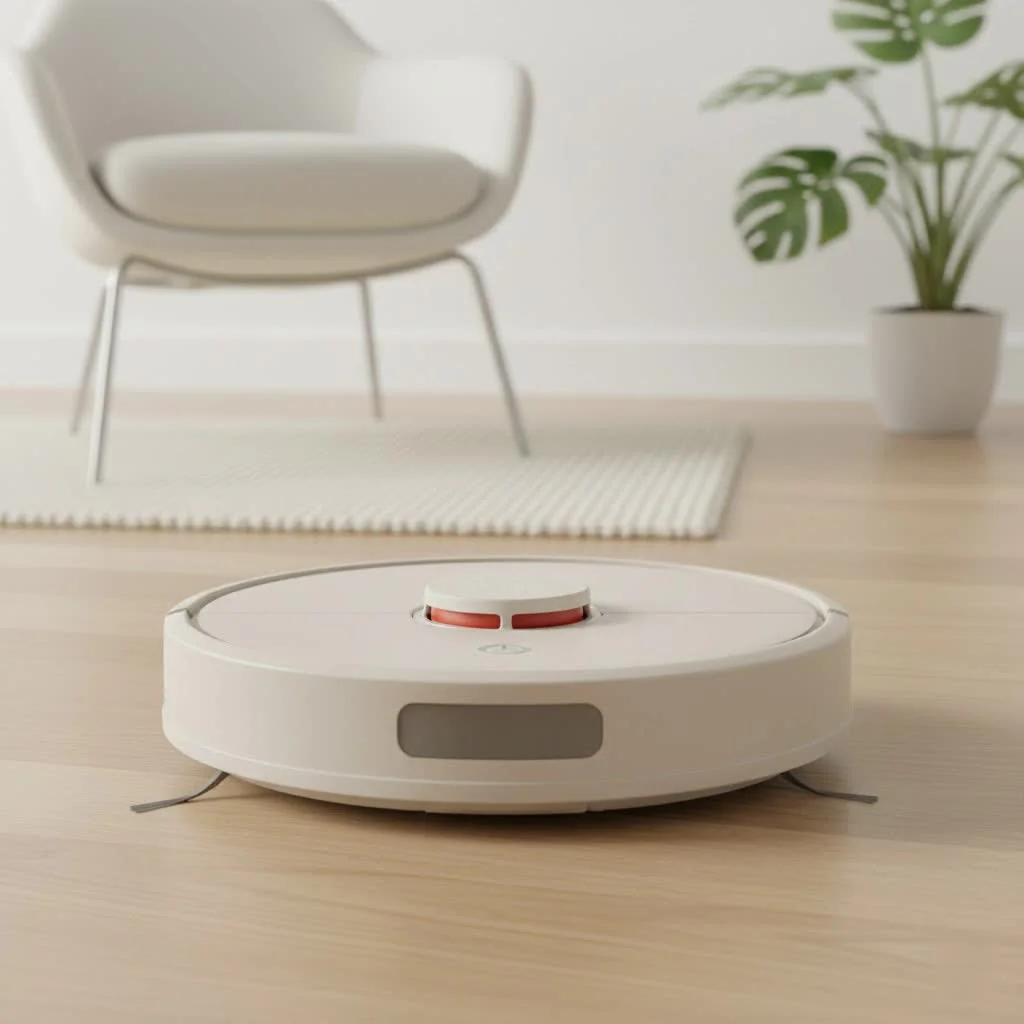
Commercial robot vacuums are sophisticated machines that transform business cleanliness by offering efficiency, intelligence, and consistent performance unmatched by traditional cleaning methods. These purpose-built powerhouses are designed for the intense demands of commercial environments, featuring robust materials, larger dustbins, and significantly longer battery lives to cover extensive ground without frequent human intervention. For facility managers and business owners, understanding their capabilities is essential for optimizing operations and enhancing hygiene standards.
What Sets Commercial Robot Vacuums Apart?
When we talk about a commercial robot vacuum, we’re not just discussing a souped-up version of the friendly little disc that tidies up your living room. Oh no, these are purpose-built powerhouses designed for the intense demands of commercial environments. For see our robot vacuums recommendations on this site.
Beyond the Home: Scale and Durability
The first thing you’ll notice about a commercial robot vacuum is its sheer capability to tackle vast areas. Think large office complexes, sprawling retail floors, bustling hotel lobbies, or quiet healthcare corridors. These machines are engineered with robust materials to withstand constant, heavy-duty operation, often for many hours a day. They boast significantly larger dustbins, sometimes even self-emptying into external docks, and far longer battery lives to cover extensive ground without needing frequent human intervention or recharging breaks. This means less downtime and more consistent cleaning cycles across your entire facility.
Intelligent Navigation and Mapping
Forget the random bump-and-go patterns of consumer models. A commercial robot vacuum utilizes advanced navigation technologies like LiDAR (Light Detection and Ranging) and SLAM (Simultaneous Localization and Mapping) to create incredibly precise maps of their environment. They learn layouts, identify obstacles, and devise the most efficient cleaning paths, even adapting to changes. Many can map multiple floors and no-go zones, ensuring they clean exactly where needed and avoid sensitive areas. This intelligent approach guarantees comprehensive coverage and avoids redundant passes, saving time and energy. Commercial robot vacuums are designed for the rigors of business environments, offering enhanced durability, larger capacities, and sophisticated navigation for extensive, complex spaces, unlike their residential counterparts.
Fleet Management for Business Efficiency
For larger enterprises or those with multiple locations, the ability to manage a fleet of commercial robot vacuums from a centralized system is a major upgrade. Imagine scheduling, monitoring, and even troubleshooting several units across different areas, all from a single dashboard. This level of control and insight allows businesses to optimize their cleaning operations, ensuring every corner is covered efficiently and effectively, often providing real-time cleaning reports and performance data.
The Unseen Benefits: Why Your Business Needs a Commercial Robot Vacuum
Investing in a commercial robot vacuum isn’t just about getting clean floors; it’s about unlocking a cascade of operational advantages that can significantly impact your bottom line and overall business environment.
- Reduced Operational Costs: While there’s an initial investment, the long-term savings are substantial. Commercial robot vacuums can significantly reduce the labor hours spent on routine floor cleaning, allowing human staff to be reallocated to more specialized, value-added tasks like deep cleaning, sanitization, or addressing specific client needs.
- Consistent and Superior Cleaning Quality: Robots don’t get tired or skip spots. They follow precise cleaning paths with unwavering consistency, ensuring a uniform and high-quality clean every single time. This attention to detail contributes to a more professional and inviting business environment.
- Improved Hygiene Standards: By performing frequent, thorough cleanings, often during off-hours, these robotic assistants help maintain a higher level of cleanliness, reducing dust, allergens, and pathogens. This is particularly crucial in environments like healthcare facilities, schools, or busy retail stores where public health is a top priority.
- Cleaning During Off-Hours, Minimizing Disruption: One of the greatest advantages is their ability to work autonomously when your business is closed or less active. This means they can perform comprehensive cleaning cycles without disturbing employees, customers, or guests, ensuring a pristine environment welcomes everyone each morning.
- Employee Satisfaction: By taking over the monotonous and physically demanding task of vacuuming, commercial robot vacuums can improve job satisfaction for your human cleaning staff, empowering them to focus on more complex and engaging duties.
“The integration of autonomous cleaning solutions isn’t just about cutting costs; it’s about elevating the standard of facility management. Commercial robot vacuums enable businesses to maintain unparalleled cleanliness, reflecting positively on their brand and offering a healthier environment for everyone,” says Dr. Evelyn Reed, a leading consultant in facility automation.
Key Features to Look for in a Commercial Robot Vacuum
Choosing the right commercial robot vacuum requires a careful look at the features that matter most for your specific business needs.
- Battery Life and Charging Solutions: For extensive spaces, a long-lasting battery is crucial. Look for models with smart charging docks that the robot can return to autonomously, ensuring it’s always ready for its next scheduled clean. Some even offer rapid charging options.
- Dustbin Capacity and Self-Emptying: Commercial environments generate more debris. A large dustbin minimizes the frequency of manual emptying. Self-emptying stations, which transfer collected debris into a larger bin, are a significant advantage, reducing daily maintenance tasks for your staff.
- Advanced Obstacle Avoidance and Drop Sensors: The ability to navigate complex environments, avoid furniture, cables, and sudden drops (like stairs) without getting stuck or damaged is paramount. High-end sensors and AI-powered avoidance systems are key here.
- Mapping and Zone Cleaning Capabilities: Precise mapping allows for efficient cleaning paths. Zone cleaning enables you to designate specific areas for cleaning or exclusion, giving you granular control over where and when the robot operates.
- Connectivity and Smart Integration: Look for robots that offer app control for scheduling and monitoring. Integration with existing Building Management Systems (BMS) or IoT platforms can further streamline operations and provide valuable data.
- Maintenance and Ease of Service: Consider how easy it is to replace brushes, filters, and other wear-and-tear components. Accessible design and readily available parts contribute to a longer lifespan and lower total cost of ownership.
Navigating the Challenges: What to Consider Before Investing
While the benefits are clear, a thoughtful approach is necessary before integrating a commercial robot vacuum into your operations.
- Initial Investment vs. Long-Term Savings: Commercial-grade robots come with a higher upfront cost than consumer models. It’s vital to perform a thorough cost-benefit analysis, factoring in labor savings, improved cleaning quality, and extended equipment lifespan to calculate your true return on investment (ROI).
- Building Layout and Obstacles: While advanced navigation is standard, extremely cluttered spaces, frequent changes in layout, or significant floor transitions (like thick rugs or steps) can still pose challenges. A site assessment to understand your facility’s specific needs is highly recommended.
- Staff Training and Integration into Cleaning Protocols: These robots are tools to augment your cleaning staff, not fully replace them. Proper training for your team on how to operate, monitor, and maintain the robots is essential for seamless integration and maximum effectiveness.
- Type of Debris and Flooring: Ensure the commercial robot vacuum you choose is suitable for the specific types of debris (e.g., fine dust, larger particles, pet hair) and flooring materials (e.g., carpet, hardwood, tile, linoleum) present in your facility. Some models are better suited for specific tasks than others.
Keeping Your Robotic Assistant in Top Shape: Maintenance Tips
Just like any piece of advanced machinery, a commercial robot vacuum thrives on regular, preventive maintenance. A little care goes a long way in ensuring its longevity and consistent performance.
- Regular Emptying and Filter Cleaning: This is probably the most frequent task. Even with self-emptying docks, filters still need periodic cleaning or replacement to maintain suction power and air quality.
- Brush Inspection and Replacement: Main brushes and side brushes can accumulate hair, strings, and debris. Regularly inspect them for tangles or wear and replace them as recommended by the manufacturer.
- Sensor Cleaning: The eyes and ears of your robot vacuum are its sensors. Keep them clean and free of dust or smudges to ensure accurate navigation and obstacle avoidance. A soft, dry cloth usually does the trick.
- Software Updates: Manufacturers frequently release software updates that can improve navigation, add features, and fix bugs. Ensure your robot’s firmware is always up to date for optimal performance.
The Future of Clean: Emerging Trends in Commercial Robot Vacuums
The world of robotic cleaning is evolving at a breathtaking pace. What can businesses expect next from the commercial robot vacuum?
- Enhanced AI and Machine Learning: Robots will become even smarter, adapting more seamlessly to dynamic environments, learning from past runs, and predicting cleaning needs based on traffic patterns or events.
- Integration with Other Smart Building Systems: Expect deeper integration with building management systems, HVAC, and security systems. Imagine a robot vacuum coordinating its cleaning schedule with occupancy sensors or air quality monitors.
- Modular Designs and Multi-functional Units: We’re already seeing robots that can both vacuum and mop. The future holds more modular designs, allowing businesses to easily swap out components to handle different cleaning tasks or add new functionalities as needed.
- Increased Sustainability and Energy Efficiency: Manufacturers are focusing on creating more eco-friendly robots, with longer-lasting components, reduced energy consumption, and more recyclable materials.
Frequently Asked Questions
What kind of businesses benefit most from commercial robot vacuums?
|
Our Picks for the Best Robot Vacuum in 2026
As an Amazon Associate I earn from qualifying purchases.
|
||
| Num | Product | Action |
|---|---|---|
| 1 | roborock Q10 S5+ Robot Vacuum and Mop, 10,000Pa Suction, Upgraded from Q8 max+, 70 Days Self-Emptying, Obstacle Avoidance, Sonic Mopping, Dual Anti-Tangle Design, Auto Mop Lifting, Ideal for Pet Hair |

|
| 2 | ILIFE V5s Plus Robot Vacuum and Mop Combo with Wi-Fi/App/Alexa, Automatic Self-Charging Robotic Vacuum Cleaner, Slim and Quiet, Cleans Hard Floors Carpets and Pet Hair (V5s Pro Upgrade Version) |
|
| 3 | ILIFE V2 Robot Vacuum Cleaner, Tangle-Free Suction, 120 Mins Runtime, Slim, Self-Charging Robotic Vacuum Cleaner, Ideal for Pet Hair and Hard Floors |
|
| 4 | Robot Vacuum and Mop Combo, 2 in 1 Mopping Robotic Vacuum Cleaner with Schedule, Wi-Fi/App/Remote, Strong Suction, Self-Charging, Slim, Ideal for Hard Floor, Pet Hair, Low-Pile Carpet |
|
| 5 | ILIFE A30 Pro Robot Vacuum and Mop, Self Emptying Station for 60 Days, 5000Pa Suction, LiDAR Navigation, No-Go Zones, 2.4G WiFi/App/Alexa/Remote Control, Roller Brush for Carpet, Hard Floors, 110V |
|
| 6 | Bagotte Robot Vacuum and Mop, Robot Vacuum Self Emptying, 5000Pa Powerful Suction, 90-Day Hands-Free, Advanced Smart Mapping, LiDAR Navigation Robotic Vacuum for Pet Hair, Dust, Carpet, WiFi/App/Alexa |
|
| 7 | Tikom Robot Vacuum and Mop Combo, 5000Pa Robotic Vacuum Cleaner, 150 Min Max, App & Remote Control, Ideal for Hard Floor, Carpet, Pet Hair, Self-Charge(G8000 Max) |
|
| 8 | Robot Vacuum and Mop, 3-in-1 Robotic Vacuum Cleaner with 70-Day Self-Emptying Base, 360° LiDAR Navigation, Smart Mapping & Auto-Return, 6000Pa Strong Suction for Pet Hair, Carpets & Hard Floors |
|
| 9 | Robot Vacuum and Mop Combo, 11500Pa Suction, 3-in-1 Robotic Vacuum with Smart LiDAR Navigation, 70 Day Self-Emptying,160 Min Runtime,App/Alexa/Voice Control, Ideal for Pet Hair, Carpet & Hard Floor |
|
| 10 | Tikom Robot Vacuum and Mop, 6000Pa Robotic Vacuum Cleaner with Self-Emptying Base, 90 Days Capacity, LiDAR Navigation, Home Mapping, Ideal for Pet Hair, Hard Floors, Carpet (L8000 Plus) |
|
Businesses with large, open floor plans, consistent traffic, and a need for high hygiene standards benefit most. This includes offices, hotels, retail stores, warehouses, schools, and even certain healthcare facilities.
Can commercial robot vacuums handle different floor types?
Yes, most commercial robot vacuums are designed to handle various floor types, including hard floors (wood, tile, concrete) and carpets. Many can automatically adjust their suction power and brush height to suit the surface.
How long does a commercial robot vacuum battery last?
Battery life varies significantly by model and usage, but commercial units are built for extended operations, often running for several hours on a single charge. Many also feature autonomous recharging, allowing them to return to their dock when power is low.
Do commercial robot vacuums replace human cleaning staff?
No, commercial robot vacuums are designed to augment and support human cleaning staff, not replace them. They handle the repetitive, mundane tasks, freeing up human cleaners to focus on more complex, detailed, and specialized cleaning duties.
What’s the typical ROI for a commercial robot vacuum?
The ROI depends on factors like labor costs, facility size, and the specific robot’s price and efficiency. However, many businesses report significant savings in operational costs, often seeing a return on investment within 1-3 years through reduced labor hours and improved cleaning consistency.
Are commercial robot vacuums difficult to set up?
Initial setup usually involves mapping the facility, which can take some time. However, once mapped, the operation is often intuitive, managed through user-friendly apps or integrated systems, making daily use straightforward for trained staff.
Conclusion
The commercial robot vacuum stands as a shows the power of innovation in facility management. It’s more than just a cleaning device; it’s a strategic asset that delivers consistent cleanliness, boosts operational efficiency, and elevates hygiene standards across diverse business environments. By embracing this technology, businesses can free up valuable human resources, ensure a pristine public image, and stay ahead in an increasingly automated world. It’s time to explore how a commercial robot vacuum can redefine cleanliness for your enterprise and unleash a new era of efficiency and sparkle.
Frequently Asked Questions
What types of businesses benefit most from commercial robot vacuums?
Businesses with large, open floor plans, consistent foot traffic, and high hygiene requirements benefit most from commercial robot vacuums. This includes offices, hotels, retail stores, warehouses, schools, and healthcare facilities, where these robots can maintain cleanliness efficiently.
Can commercial robot vacuums effectively clean different floor types?
Yes, most commercial robot vacuums are engineered to handle a variety of floor types, such as hard floors (wood, tile, concrete) and carpets. Many models feature automatic adjustments for suction power and brush height to optimize cleaning across different surfaces.
What is the typical battery life for a commercial robot vacuum?
Battery life for commercial robot vacuums varies by model and usage, but they are designed for extended operations, often running for several hours on a single charge. Many units also include autonomous recharging capabilities, allowing them to return to their dock when power is low.
Do commercial robot vacuums replace existing human cleaning staff?
No, commercial robot vacuums are intended to augment and support human cleaning staff, not replace them entirely. They manage repetitive, mundane tasks, thereby freeing up human cleaners to concentrate on more complex, detailed, and specialized cleaning duties within a facility.
What is the expected return on investment (ROI) for a commercial robot vacuum?
The ROI for a commercial robot vacuum depends on factors such as labor costs, facility size, and the specific robot's price and efficiency. Many businesses report significant operational cost savings, often achieving a return on investment within 1 to 3 years through reduced labor hours and improved cleaning consistency.
How challenging is the initial setup process for commercial robot vacuums?
Initial setup typically involves mapping the facility, which can take some time to complete thoroughly. However, once the mapping is done, daily operation is generally intuitive, managed through user-friendly apps or integrated systems, making it straightforward for trained staff.
Smart home that does not lock you in
Free PDF — protocol compatibility matrix for 30 hubs and devices.
I was excited about the promise of enhanced hygiene standards for our medical clinic. While the commercial robot vacuum does a decent job on open areas, I’ve found it’s not quite as intelligent as I hoped when navigating around exam room equipment. It gets stuck more often than I’d like, requiring some human intervention. It’s good for general upkeep, but not a complete replacement for our cleaning crew in complex spaces.
We run a busy retail store, and keeping the floors clean is a constant battle. The robust materials mentioned in the guide really sold me on upgrading to a commercial unit. It handles the daily foot traffic and occasional spills much better than the consumer-grade vacuums we used to burn through. My only minor complaint is that it sometimes struggles with very fine dust near the entrance, but overall, it’s a huge improvement.
As a facility manager for a mid-sized warehouse, efficiency is key. The consistent performance of our new commercial robot vacuum has been incredible. It truly transforms our business cleanliness by handling the daily grind without constant supervision. The ability to cover extensive ground without frequent human intervention has freed up my team for other important tasks. Highly recommend for large commercial spaces.
I manage a small office building and decided to invest in a commercial robot vacuum after reading about their longer battery lives. It’s been a game-changer! It covers our entire floor plan on a single charge, which is something our old residential model could never do. The larger dustbin also means I’m not constantly emptying it. Definitely worth the investment for any business owner looking to optimize cleaning.