LiDAR robot vacuums represent the future of smart home cleaning by using Light Detection and Ranging technology to create highly detailed 3D maps of your home, enabling precise navigation, superior obstacle avoidance, and efficient cleaning in any lighting condition. This advanced mapping capability, combined with Simultaneous Localization and Mapping (SLAM), allows the robot to understand its environment, pinpoint its location, and execute systematic cleaning paths, ensuring comprehensive coverage and transforming mundane chores into an intelligent experience.
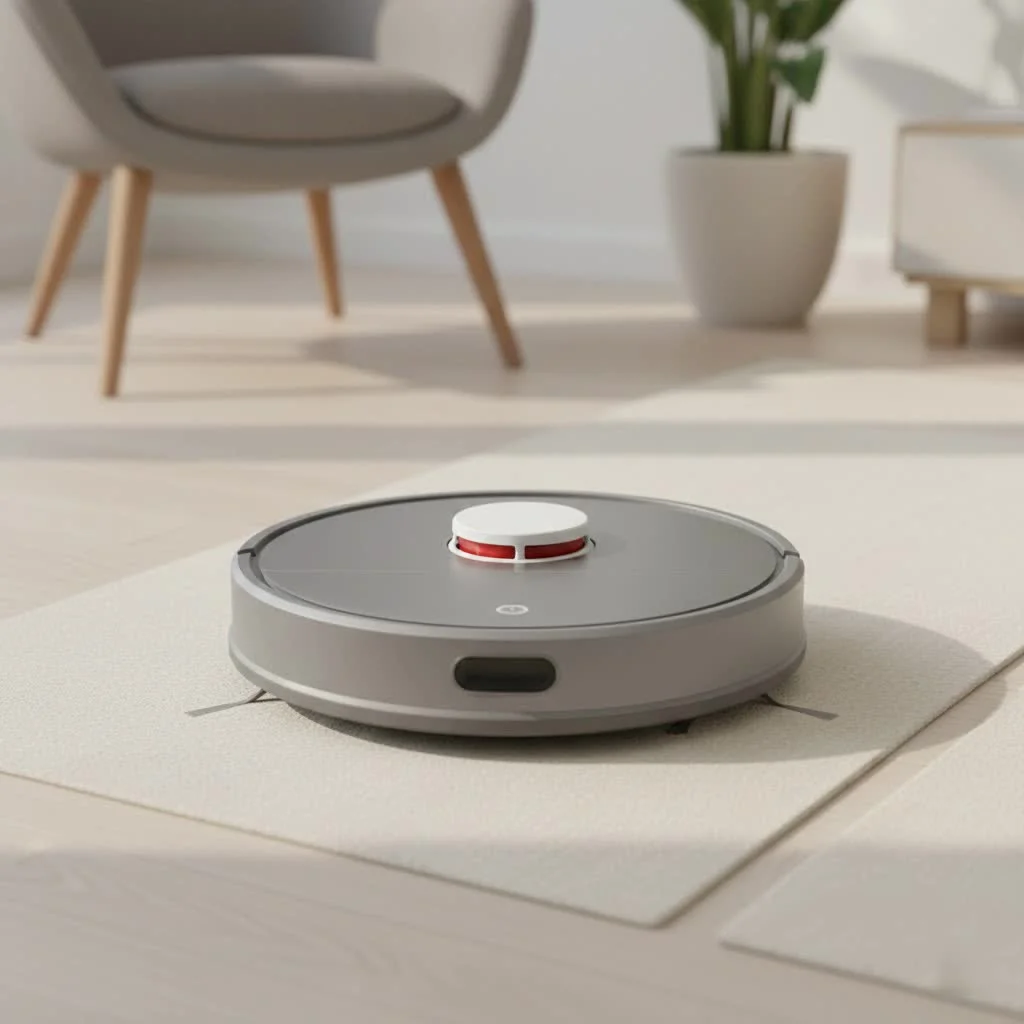
What is LiDAR Technology and How Does It Clean Smarter?
At its core, LiDAR stands for Light Detection and Ranging. This technology allows your robot vacuum to “see” and understand its surroundings with incredible detail, translating into a smarter, more efficient cleaning process. For shop curated robot vacuums on this site.
The technology operates through a small, often spinning turret on top of the robot vacuum. This sensor emits invisible laser pulses in all directions. When these laser beams hit objects like walls, furniture, or pet toys, they bounce back to the sensor. By precisely measuring the time it takes for each laser pulse to return, the robot calculates the exact distance to every object. This process occurs thousands of times per second, constructing a real-time, highly detailed 3D map of your entire home.
This intricate mapping ability is coupled with Simultaneous Localization and Mapping (SLAM). SLAM allows the robot to build a map of its environment and pinpoint its own location within that map. This means your lidar robot vacuum knows exactly where it is, where it’s been, and where it needs to go next, ensuring comprehensive and efficient coverage without getting lost.
The Unbeatable Advantages of a LiDAR Robot Vacuum
Once you experience the difference a lidar robot vacuum makes, it’s hard to go back. These advanced cleaning companions offer numerous benefits that traditional robot vacuums cannot match.
Precision Mapping & Navigation: Building a Blueprint of Your Home
One of the standout features of LiDAR technology is its ability to create incredibly accurate and detailed floor plans of your home. During its first run, your lidar robot vacuum meticulously surveys your space, identifying walls, doorways, and furniture, creating a digital blueprint more precise than a hand-drawn sketch. It s this map for future cleaning sessions and updates it if furniture moves. This persistent mapping enables sophisticated features like setting virtual no-go zones, creating virtual walls, and scheduling specific rooms for cleaning, all from a smartphone app.
Superior Obstacle Avoidance: No More Bumping Around
LiDAR technology is a major upgrade for obstacle avoidance. With millimeter-level accuracy, the sensors detect obstacles in real-time, from dining chair legs to pet bowls and discarded socks. The vacuum intelligently navigates around these items instead of crashing into them. This protects your furniture and belongings and prevents the robot from getting stuck, ensuring a smooth and uninterrupted cleaning cycle.
Master of the Dark: Consistent Cleaning in Any Light
|
Our Picks for the Best Robot Vacuum in 2026
As an Amazon Associate I earn from qualifying purchases.
|
||
| Num | Product | Action |
|---|---|---|
| 1 | Robot Vacuum and Mop, 3-in-1 Robotic Vacuum Cleaner with 70-Day Self-Emptying Base, 360° LiDAR Navigation, Smart Mapping & Auto-Return, 6000Pa Strong Suction for Pet Hair, Carpets & Hard Floors |

|
| 2 | ILIFE A30 Pro Robot Vacuum and Mop, Self Emptying Station for 60 Days, 5000Pa Suction, LiDAR Navigation, No-Go Zones, 2.4G WiFi/App/Alexa/Remote Control, Roller Brush for Carpet, Hard Floors, 110V |
|
| 3 | ILIFE V2 Robot Vacuum Cleaner, Tangle-Free Suction, 120 Mins Runtime, Slim, Self-Charging Robotic Vacuum Cleaner, Ideal for Pet Hair and Hard Floors |
|
| 4 | roborock Q10 S5+ Robot Vacuum and Mop, 10,000Pa Suction, Upgraded from Q8 max+, 70 Days Self-Emptying, Obstacle Avoidance, Sonic Mopping, Dual Anti-Tangle Design, Auto Mop Lifting, Ideal for Pet Hair |
|
| 5 | Bagotte Robot Vacuum and Mop, Robot Vacuum Self Emptying, 5000Pa Powerful Suction, 90-Day Hands-Free, Advanced Smart Mapping, LiDAR Navigation Robotic Vacuum for Pet Hair, Dust, Carpet, WiFi/App/Alexa |
|
| 6 | Robot Vacuum and Mop Combo, 2 in 1 Mopping Robotic Vacuum Cleaner with Schedule, Wi-Fi/App/Remote, Strong Suction, Self-Charging, Slim, Ideal for Hard Floor, Pet Hair, Low-Pile Carpet |
|
| 7 | Tikom Robot Vacuum and Mop, 6000Pa Robotic Vacuum Cleaner with Self-Emptying Base, 90 Days Capacity, LiDAR Navigation, Home Mapping, Ideal for Pet Hair, Hard Floors, Carpet (L8000 Plus) |
|
| 8 | ILIFE V5s Plus Robot Vacuum and Mop Combo with Wi-Fi/App/Alexa, Automatic Self-Charging Robotic Vacuum Cleaner, Slim and Quiet, Cleans Hard Floors Carpets and Pet Hair (V5s Pro Upgrade Version) |
|
| 9 | Robot Vacuum and Mop Combo, 11500Pa Suction, 3-in-1 Robotic Vacuum with Smart LiDAR Navigation, 70 Day Self-Emptying,160 Min Runtime,App/Alexa/Voice Control, Ideal for Pet Hair, Carpet & Hard Floor |
|
| 10 | Tikom Robot Vacuum and Mop Combo, 5000Pa Robotic Vacuum Cleaner, 150 Min Max, App & Remote Control, Ideal for Hard Floor, Carpet, Pet Hair, Self-Charge(G8000 Max) |
|
Unlike camera-based navigation systems (vSLAM) that struggle in dimly lit rooms, LiDAR operates independently of ambient light. Since it uses laser pulses, your lidar robot vacuum performs just as effectively in a brightly lit living room as it does in a dark hallway, under furniture, or in a basement. This consistent performance means you can schedule cleaning at any time, knowing your robot will maintain superior navigation and cleaning efficiency.
Enhanced Efficiency and Coverage: Clean Smarter, Not Harder
With its precise mapping and intelligent navigation, a lidar robot vacuum cleans your home more logically and efficiently. Instead of random patterns, it typically cleans in neat, straight lines, ensuring every inch of your floor is covered without missing spots or repeatedly cleaning areas already done. This systematic approach results in faster cleaning times and a more thorough clean overall, saving valuable time and effort.
LiDAR vs. vSLAM: Why Laser Precision Often Wins
When exploring robot vacuums, you’ll often encounter discussions comparing LiDAR with vSLAM (Visual Simultaneous Localization and Mapping). While both aim to help your robot navigate, their approaches differ significantly.
vSLAM relies on cameras to capture visual data and interpret surroundings, similar to how human eyes work. While effective in well-lit environments with clear visual landmarks, vSLAM can falter in low-light conditions or if the camera lens becomes dirty. It might also be slower to build an initial map and can sometimes lead to less efficient cleaning paths.
LiDAR, on the other hand, offers laser precision. It is not dependent on light, creating highly accurate 3D maps faster and more consistently. This makes it ideal for complex layouts or multi-floor homes, offering superior reliability in navigation and obstacle avoidance. As LiDAR primarily scans distances, it offers a higher degree of privacy compared to camera-based systems that capture visual images of your home. Some advanced robot vacuums are now even combining both LiDAR and camera systems, leveraging the strengths of each for unparalleled navigation and object recognition.
What to Look for in Your Next LiDAR Robot Vacuum
Choosing the right lidar robot vacuum involves more than just navigation. Here are some key features to consider:
- Suction Power: Look for strong suction (measured in Pa) to effectively pick up dirt, dust, and pet hair from various floor types.
- Battery Life: A longer battery life means the vacuum can cover more ground on a single charge, especially crucial for larger homes.
- App Control & Customization: Robust smartphone apps offer advanced features like setting no-go zones, virtual walls, multi-floor mapping, and detailed cleaning schedules.
- Self-Emptying Features: For ultimate convenience, many lidar vacuums now come with self-emptying dock stations, reducing how often you need to interact with the device.
- Advanced AI/Camera Integration: Some models combine LiDAR with AI and cameras for enhanced object identification (not just avoidance), allowing them to recognize specific items like pet waste or cables and react accordingly.
Are There Any Downsides to LiDAR Robot Vacuums?
While lidar robot vacuums offer immense benefits, it’s also worth being aware of a few considerations. Due to the advanced technology, they can sometimes be more expensive than basic models. The spinning turret housing the LiDAR sensor, while crucial, is a mechanical part that could potentially be more prone to wear over time compared to solid-state sensors. While excellent at detecting most obstacles, very low furniture (under 3 inches) might occasionally pose a challenge as the laser might not “see” underneath. Reflective surfaces like mirrors or shiny metal heat grates can also sometimes confuse the laser, causing the robot to interpret them as solid objects or open spaces incorrectly.
“According to Dr. Aris Thorne, a lead researcher in autonomous systems at the Global Robotics Institute, ‘LiDAR isn’t just about cleaning; it’s about giving your home a true sense of spatial intelligence, allowing for unprecedented autonomy and efficiency in household tasks.'”
The Future of Floor Care: What’s Next for LiDAR Robot Vacuums?
The evolution of robot vacuums, spearheaded by LiDAR technology, is continuous. We can anticipate even more sophisticated AI integration, leading to vacuums that not only avoid obstacles but also understand what those obstacles are, allowing for more intelligent decisions. Improved multi-sensor fusion, combining LiDAR with advanced cameras and ultrasonic sensors, will create an even richer understanding of the home environment. Imagine vacuums that anticipate your cleaning needs, integrate seamlessly with your entire smart home ecosystem, and offer personalized cleaning routines that adapt to your lifestyle. The future of the lidar robot vacuum promises an even deeper level of automation and convenience, making clean floors effortless.
Conclusion
The lidar robot vacuum has undoubtedly revolutionized how we approach home cleaning. By leveraging laser precision for mapping and navigation, these intelligent devices offer unparalleled efficiency, thoroughness, and convenience. From meticulously mapping your home to deftly avoiding obstacles and performing flawlessly in any lighting condition, a lidar robot vacuum takes the guesswork and frustration out of maintaining spotless floors. Investing in this technology isn’t just buying a cleaning appliance; it’s embracing a smarter, more effortless future for your home. Experience the difference for yourself and discover how a lidar robot vacuum can improve your cleaning routine from a chore into a seamless, automated process.
Frequently Asked Questions
What is LiDAR technology and how does it work in robot vacuums?
LiDAR, or Light Detection and Ranging, uses invisible laser pulses to measure distances to objects, creating a detailed 3D map of your home. A spinning turret on the robot emits thousands of laser pulses per second, which bounce back to a sensor, allowing the vacuum to calculate exact distances and map its surroundings with millimeter-level accuracy.
How do LiDAR robot vacuums improve cleaning efficiency and coverage?
LiDAR robot vacuums improve efficiency by creating precise maps and using Simultaneous Localization and Mapping (SLAM) to navigate systematically. This ensures the robot cleans in neat, straight lines, covering every inch of the floor without missing spots or repeating areas, leading to faster and more thorough cleaning sessions.
Can LiDAR robot vacuums clean effectively in dark rooms?
Yes, LiDAR robot vacuums can clean effectively in dark rooms because their laser-based navigation operates independently of ambient light. Unlike camera-based systems (vSLAM), LiDAR's performance remains consistent whether in a brightly lit living room or a completely dark hallway, ensuring reliable cleaning at any time.
What are the main advantages of LiDAR over vSLAM in robot vacuums?
LiDAR offers laser precision, creating highly accurate 3D maps faster and more consistently than vSLAM, which relies on cameras and can struggle in low light. LiDAR also provides superior reliability in navigation and obstacle avoidance, and offers greater privacy as it primarily scans distances rather than capturing visual images.
What features should I look for when buying a LiDAR robot vacuum?
When buying a LiDAR robot vacuum, look for strong suction power (measured in Pa), long battery life for larger homes, robust app control with features like no-go zones and multi-floor mapping, and self-emptying dock stations for convenience. Some advanced models also integrate AI and cameras for enhanced object identification.
Smart home that does not lock you in
Free PDF — protocol compatibility matrix for 30 hubs and devices.
I was skeptical about upgrading, but the LiDAR technology really does make a huge difference. My old robot vacuum used to bump into everything, especially in dimly lit rooms. Now, with the new one, it navigates around furniture and even my dog’s toys with incredible precision, even at night. It’s truly impressive how it maps out the house.
I’ve been using a LiDAR robot vacuum for about a month now, and the systematic cleaning paths are a game-changer. It covers every inch of the floor without missing spots, which my previous random-navigation model always did. My only minor complaint is that the app can be a bit clunky to set up the initial 3D map, but once it’s done, it works flawlessly.
I absolutely love my new robot vacuum with SLAM technology! It’s amazing how it learns the layout of my home and gets more efficient with each cleaning cycle. I used to spend so much time vacuuming, but now I just let the robot do its thing, and it handles everything perfectly. It’s made my life so much easier.
The obstacle avoidance is definitely better than my old bot, and the detailed 3D maps are cool. However, I found that the ‘spinning’ component for the LiDAR sensor can sometimes get a bit dusty and needs occasional wiping, which is a small inconvenience. It still cleans well, but I expected it to be completely maintenance-free in that regard.