The quietest robot vacuums operate at noise levels below 60 decibels (dB), comparable to a hushed conversation, allowing for undisturbed cleaning. This is significantly quieter than standard robot vacuums, which typically range from 65-70 dB, or traditional upright vacuums that can exceed 80 dB. Key factors contributing to low noise include advanced brushless motors, optimized airflow paths, robust insulation, and anti-tangle brush roll designs.
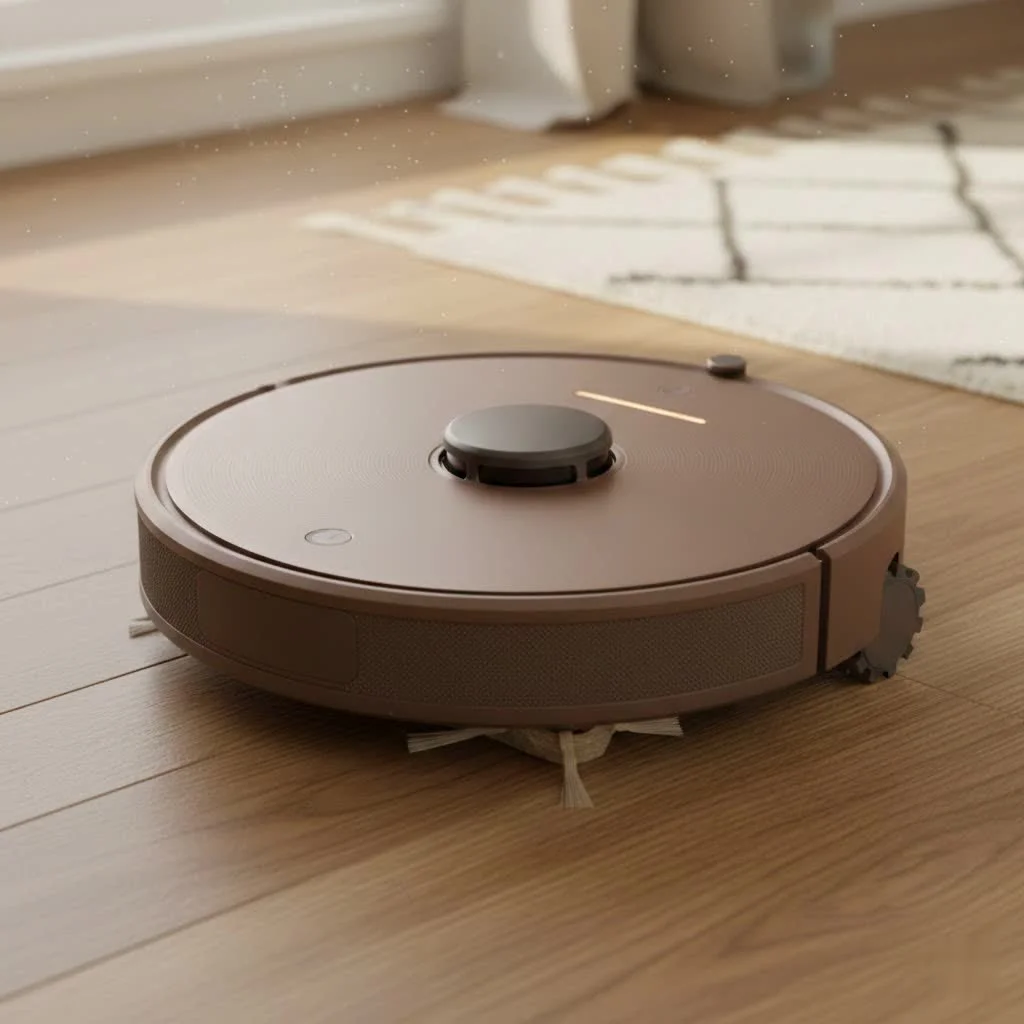
What Makes a Robot Vacuum Truly Quiet?
It’s not magic, but rather a clever combination of engineering and design choices that allow some robot vacuums to clean effectively without sounding like a miniature jet engine. Understanding these factors can help you make an informed choice.
Understanding Decibel Levels: What’s a Good dB for a Robot Vacuum?
Decibels are a logarithmic unit, meaning a small increase in numbers represents a much larger increase in perceived loudness. For instance, an appliance at 70 dB is ten times louder than one at 60 dB. Most standard robot vacuums operate between 65-70 dB. To put that in perspective, 60 dB is often compared to a normal conversation, while 70 dB is similar to a running dishwasher. A robot vacuum that stays in the 55-60 dB range is considered genuinely quiet, allowing you to work, watch TV, or even sleep undisturbed while it cleans.
The Engineering Behind Low-Noise Cleaning
The secret to a quiet robot vacuum lies deep within its design. Manufacturers employ several strategies to keep the decibel levels down:
- Advanced Motor Technology: Many quiet models utilize brushless motors, which are inherently less noisy than their brushed counterparts. They also often feature optimized airflow paths that reduce turbulence and the high-pitched whine typically associated with suction.
- Insulation and Build Quality: Better materials and more robust construction can help absorb and dampen internal vibrations, preventing them from escaping as noise.
- Wheel Design and Suspension: Smoother movement across different floor types and better shock absorption from obstacles contribute to a quieter operation, reducing bumps and thuds.
- Brush Roll and Anti-Tangle Features: Brush rolls are often a source of noise, especially when tangled with hair. Innovations like anti-tangle brushes or ZeroTangle technology, seen in some Ecovacs models, minimize this issue, ensuring consistent and quieter performance.
- “Quiet” or “Eco” Modes: Many robot vacuums offer specific settings that reduce suction power, and consequently, noise output, making them perfect for late-night cleans or when you’re in the room.
Top Contenders for the Quietest Robot Vacuums
The market is buzzing with innovative robot vacuums, and thankfully, many are designed with tranquility in mind. While specific models evolve, certain brands consistently deliver on the promise of quiet operation across different price points and feature sets.
Budget-Friendly Whisperers
|
Our Picks for the Best Robot Vacuum in 2026
As an Amazon Associate I earn from qualifying purchases.
|
||
| Num | Product | Action |
|---|---|---|
| 1 | Tikom Robot Vacuum and Mop, 6000Pa Robotic Vacuum Cleaner with Self-Emptying Base, 90 Days Capacity, LiDAR Navigation, Home Mapping, Ideal for Pet Hair, Hard Floors, Carpet (L8000 Plus) |

|
| 2 | Bagotte Robot Vacuum and Mop, Robot Vacuum Self Emptying, 5000Pa Powerful Suction, 90-Day Hands-Free, Advanced Smart Mapping, LiDAR Navigation Robotic Vacuum for Pet Hair, Dust, Carpet, WiFi/App/Alexa |
|
| 3 | ILIFE V2 Robot Vacuum Cleaner, Tangle-Free Suction, 120 Mins Runtime, Slim, Self-Charging Robotic Vacuum Cleaner, Ideal for Pet Hair and Hard Floors |
|
| 4 | Robot Vacuum and Mop, 3-in-1 Robotic Vacuum Cleaner with 70-Day Self-Emptying Base, 360° LiDAR Navigation, Smart Mapping & Auto-Return, 6000Pa Strong Suction for Pet Hair, Carpets & Hard Floors |
|
| 5 | Robot Vacuum and Mop Combo, 11500Pa Suction, 3-in-1 Robotic Vacuum with Smart LiDAR Navigation, 70 Day Self-Emptying,160 Min Runtime,App/Alexa/Voice Control, Ideal for Pet Hair, Carpet & Hard Floor |
|
| 6 | Tikom Robot Vacuum and Mop Combo, 5000Pa Robotic Vacuum Cleaner, 150 Min Max, App & Remote Control, Ideal for Hard Floor, Carpet, Pet Hair, Self-Charge(G8000 Max) |
|
| 7 | Robot Vacuum and Mop Combo, 2 in 1 Mopping Robotic Vacuum Cleaner with Schedule, Wi-Fi/App/Remote, Strong Suction, Self-Charging, Slim, Ideal for Hard Floor, Pet Hair, Low-Pile Carpet |
|
| 8 | roborock Q10 S5+ Robot Vacuum and Mop, 10,000Pa Suction, Upgraded from Q8 max+, 70 Days Self-Emptying, Obstacle Avoidance, Sonic Mopping, Dual Anti-Tangle Design, Auto Mop Lifting, Ideal for Pet Hair |
|
| 9 | ILIFE V5s Plus Robot Vacuum and Mop Combo with Wi-Fi/App/Alexa, Automatic Self-Charging Robotic Vacuum Cleaner, Slim and Quiet, Cleans Hard Floors Carpets and Pet Hair (V5s Pro Upgrade Version) |
|
| 10 | ILIFE A30 Pro Robot Vacuum and Mop, Self Emptying Station for 60 Days, 5000Pa Suction, LiDAR Navigation, No-Go Zones, 2.4G WiFi/App/Alexa/Remote Control, Roller Brush for Carpet, Hard Floors, 110V |
|
You don’t always need to break the bank for a peaceful cleaning experience. Some entry-level robot vacuums prioritize quiet operation alongside effective basic cleaning.
For example, the Eufy RoboVac 11S (Slim) is frequently lauded for its remarkably low noise level, often coming in at around 55 dB. It’s a fantastic option for smaller spaces or those on a tighter budget who need a simple, unobtrusive cleaner without advanced mapping or Wi-Fi connectivity. Its slim profile also means it can navigate under low-lying furniture, cleaning hidden dust bunnies silently.
Mid-Range Performers with a Mute Button
Stepping up a notch, you find models that offer a strong balance of advanced features and low noise. These are often ideal for homes needing more intelligent navigation and stronger suction without the premium price tag.
The Roborock Q7 Max+ (around 60 dB) is a strong example, combining robust suction with intelligent LiDAR mapping and a convenient self-emptying dock. Similarly, the iRobot Roomba j7+ (~58 dB) excels with AI obstacle avoidance, which is particularly useful for homes with pets or clutter, ensuring a smoother, quieter run. The Shark AI Ultra 2-in-1 (~59 dB) also offers a quiet balance of power and a hybrid mop function, providing strong edge cleaning without a distracting din.
Premium Powerhouses with Serene Operation
At the higher end, you’ll discover robot vacuums that boast a full suite of modern features while still maintaining impressive quietness. These are often all-in-one solutions for the most demanding cleaning tasks.
The Ecovacs Deebot T10 Omni (~56 dB) stands out as a premium choice, offering a vacuum and mop combination with auto-washing and drying of mop pads. It achieves this powerful, multi-functional cleaning with a surprisingly low noise output. Other advanced models like the Dreame X40 and Roborock S8 MaxV are also gaining recognition for their powerful yet quiet performance, even tackling pet hair with ease. It’s important to note, however, that while the vacuuming itself might be quiet, the self-emptying and mop-cleaning stations of these premium models can generate considerable noise during their emptying and washing cycles, though these are typically short bursts.
“Finding a quiet robot vacuum isn’t just about the decibel number; it’s about the overall engineering,” says Dr. Anya Sharma, an expert in acoustic design for home appliances. “Manufacturers are increasingly focusing on brushless motors and optimized airflow paths to deliver powerful suction without the distracting hum. It’s a blend of thoughtful design and advanced technology that transforms your cleaning experience from a chore into a seamless background task.”
Beyond Decibels: Factors to Consider When Choosing
While noise level is your primary concern, other aspects contribute to the overall effectiveness and suitability of a quiet robot vacuum for your home.
Suction Power vs. Noise Level: A Delicate Balance
A common misconception is that a quieter robot vacuum must be less powerful. This is no longer true with advancements in motor technology. Many modern quiet robot vacuums, like the Roborock Q7 Max+ with 4200 Pa suction or the Ecovacs Deebot T10 Omni with 5000 Pa, demonstrate that strong cleaning performance can coexist with low noise. Always check the suction power (measured in Pascals, or Pa) alongside the decibel rating to ensure it meets your cleaning needs.
Floor Types and Pet Hair Considerations
Your home’s flooring plays a role. Quieter vacuums often perform well on hard floors like wood and tile. For carpets, especially thicker ones, you might need a model with higher suction, which could potentially increase noise slightly. If you have pets, look for models with anti-tangle brush rolls and strong suction to manage pet hair effectively, all while maintaining a low noise profile. Tangles can increase noise, so features like Ecovacs’ ZeroTangle technology are a big plus.
Smart Features and App Control
Modern robot vacuums come packed with intelligent features that can enhance your quiet cleaning experience. Scheduling functions allow you to set cleaning times when you’re out of the house, ensuring you return to clean floors without hearing a peep. “Do not disturb” zones prevent the vacuum from cleaning in sensitive areas at specific times. Advanced mapping and AI obstacle avoidance lead to more efficient and less “bumpy” cleaning, further contributing to a quiet operation.
Self-Emptying Docks: A Loud Interruption?
Many premium quiet robot vacuums come with self-emptying docks. While the robot itself operates quietly, the act of emptying its dustbin into the dock’s larger receptacle can be quite loud, often reaching 70-80 dB for a short duration (usually 5-10 seconds). Consider the placement of the self-emptying dock if you are particularly sensitive to noise, perhaps in a utility room or an area away from main living spaces.
Expert Tips for a Quieter Robot Vacuum Experience
Even with the quietest model, a few habits can further enhance your peaceful cleaning:
- Regular Maintenance is Key: Keep the brushes, filters, and wheels clean. Clogged filters or tangled brush rolls force the motor to work harder, increasing noise.
- Schedule Smartly: Utilize scheduling features to run your robot vacuum when you’re not home, ensuring a pristine floor without any disturbance.
- Utilize Quiet Modes: If your robot vacuum has an “eco” or “quiet” mode, use it for general maintenance cleaning, reserving maximum suction for tougher messes.
- Clear the Path: Remove small obstacles, loose cables, and clutter from the floor. This prevents the robot from getting stuck or bumping into things, which can generate unexpected noise.
The Future of Silent Cleaning: What’s Next?
The evolution of robot vacuums points towards even quieter, more autonomous cleaning. We can anticipate further advancements in motor technology for near-silent operation, coupled with more sophisticated AI that learns and adapts to your home environment, optimizing cleaning paths for efficiency and discretion. Improved noise-dampening materials and even “active noise cancellation” could become standard, truly making the robot vacuum an invisible helper.
Conclusion
Embracing the quietest robot vacuum is about more than just a clean floor; it’s about reclaiming peace and quiet in your home. With advancements in technology, you no longer have to sacrifice powerful cleaning for serene operation. Whether you’re looking for a budget-friendly helper or a premium, all-in-one cleaning powerhouse, there’s a quiet robot vacuum out there designed to fit seamlessly and silently into your life. Take the time to consider your needs, understand the decibel ratings, and explore the features that matter most to you. Once you experience the effortless calm of a quiet robot vacuum at work, you’ll wonder how you ever lived without it. So go ahead, find your perfect silent cleaning companion, and enjoy the peace and cleanliness you deserve.
Frequently Asked Questions
What decibel level is considered quiet for a robot vacuum?
A robot vacuum is considered genuinely quiet if it operates in the 55-60 dB range. This noise level is comparable to a normal conversation, allowing you to work, watch TV, or sleep undisturbed while it cleans.
Do quieter robot vacuums sacrifice suction power?
No, advancements in motor technology mean quieter robot vacuums no longer sacrifice suction power. Models like the Roborock Q7 Max+ (4200 Pa) and Ecovacs Deebot T10 Omni (5000 Pa) demonstrate strong cleaning performance with low noise output.
What engineering features make a robot vacuum quiet?
Quiet robot vacuums incorporate advanced brushless motor technology, optimized airflow paths to reduce turbulence, robust insulation for vibration dampening, and improved wheel designs for smoother movement. Anti-tangle brush rolls also minimize noise caused by hair entanglement.
Are self-emptying docks for quiet robot vacuums also quiet?
While the robot vacuum itself may be quiet, its self-emptying dock can be quite loud during the emptying cycle, often reaching 70-80 dB for 5-10 seconds. Consider placing the dock in a utility room or an area away from main living spaces if noise sensitivity is a concern.
How can I make my robot vacuum even quieter?
To enhance quiet operation, perform regular maintenance by cleaning brushes, filters, and wheels. Utilize scheduling features to run the vacuum when you're away, use 'eco' or 'quiet' modes for general cleaning, and clear paths of obstacles to prevent bumps and jams.
Choose a Quiet Robot Vacuum
Selecting a quiet robot vacuum involves evaluating decibel levels, engineering features, and specific model performance to ensure a peaceful cleaning experience.
Prioritize models operating below 60 dB for genuinely quiet performance. Remember that a 10 dB increase represents a tenfold increase in perceived loudness, so small differences matter significantly.
Look for robot vacuums with brushless motors, optimized airflow paths, and robust insulation. Features like anti-tangle brush rolls and advanced wheel designs also contribute to quieter operation by reducing friction and vibrations.
Ensure the vacuum's suction power (in Pascals) meets your cleaning needs, especially for carpets or pet hair, without compromising noise levels. Modern quiet vacuums can offer strong suction, such as 4200 Pa or 5000 Pa, at low decibels.
Utilize smart features like scheduling and 'do not disturb' zones for discreet cleaning. If considering a self-emptying dock, be aware that emptying cycles can be loud (70-80 dB) and plan its placement accordingly.
Smart home that does not lock you in
Free PDF — protocol compatibility matrix for 30 hubs and devices.
I was so tired of my old robot vacuum sounding like a jet engine, especially when I was trying to work from home. This guide really helped me understand the decibel levels. I ended up getting one of the models mentioned that operates below 60 dB, and it’s made such a difference. I can barely hear it running now, even when I’m on a call.
I appreciated the breakdown of what makes a robot vacuum quiet, especially the part about robust insulation. I bought a model that was supposed to be super quiet, but I still find it a bit louder than a hushed conversation, especially on carpet. It does a great job cleaning, but I was hoping for something even more discreet. Maybe my expectations were too high for the price range.
My biggest concern was finding a robot vacuum that wouldn’t scare my dog every time it turned on. The info about advanced brushless motors and optimized airflow paths was really helpful in narrowing down my choices. I picked up a new one last week, and while it’s not completely silent, it’s definitely much quieter than my previous one. My dog is much more relaxed now.
I’m a night shift worker, so having a quiet home during the day is crucial. The details on anti-tangle brush roll designs and how they contribute to lower noise really caught my eye. I invested in one of the higher-end quiet models, and it’s fantastic. It cleans while I sleep without disturbing me at all. Best purchase for my sanity!