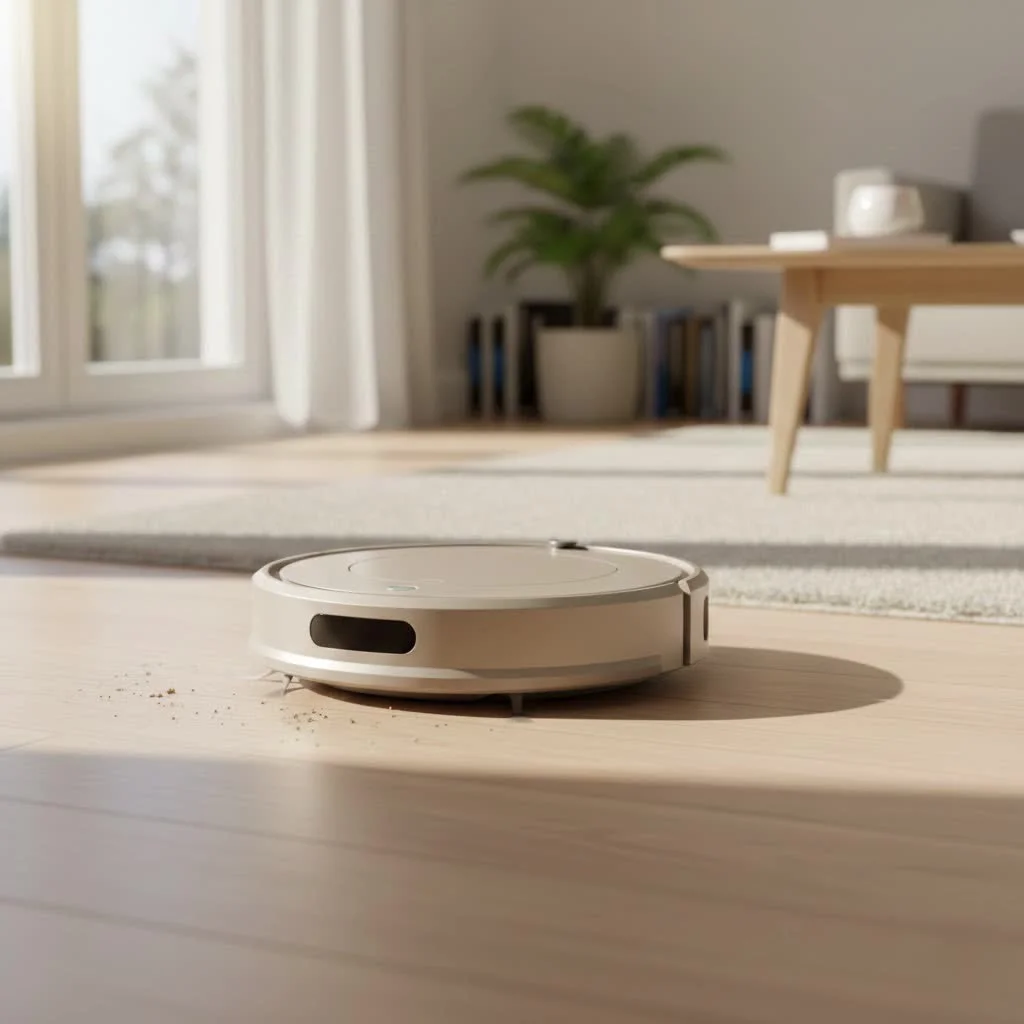
For pet owners, the best robot vacuums effectively manage pet hair and dander through specialized features like strong suction (2500 Pa+), tangle-free rubber brushrolls, large dustbins (0.5L+) or self-emptying stations, and HEPA filtration. These devices transform daily cleaning into an automated routine, improving indoor air quality and saving significant time for households with furry companions.
Understanding the Pet Hair Problem: Why Regular Vacuums Fall Short
Our pets bring so much joy, but they also contribute a significant amount of hair and dander. Standard robot vacuums often struggle with the volume and fine texture of pet hair; their bristle brushes can tangle, small dustbins fill quickly, and basic filtration may not capture airborne allergens. This isn’t just an aesthetic issue; pet dander can exacerbate allergies and diminish overall indoor air quality. A robot vacuum specifically designed for pets must address these unique challenges effectively.
Key Features That Make a Robot Vacuum Pet-Ready
When selecting a robot vacuum for pets, certain features are essential for effectively managing animal messes. These components elevate a standard cleaner to a pet-owner’s indispensable tool.
Superior Suction Power: The Hair Hunter
Effective pet hair removal hinges on robust suction power. Pet owners should prioritize models with a high Pascal (Pa) rating, ideally 2500 Pa or more. This ensures the vacuum can extract embedded hair from carpets and efficiently collect loose strands from hard floors. Strong suction is the primary defense against pet hair accumulation.
Tangle-Free Brushes: No More Hairballs on Rollers
A common frustration with pet hair is tangled brush rolls. Many pet-friendly robot vacuums now incorporate innovative rubber or silicone brushrolls, often in dual sets. These designs significantly reduce the likelihood of trapping long hairs, minimizing the need for manual detangling. As smart home technology expert Mark Jensen notes, “A robot vacuum is only as efficient as its brush system; for pets, tangle-free is king.”
Large Dustbins & Self-Emptying Stations: Less Mess for You
Pet hair accumulates rapidly, making a small dustbin inconvenient due to frequent emptying. Look for larger dustbins, preferably 0.5 liters or more. Many premium robot vacuums for pets also feature self-empty bases that automatically transfer collected debris into a larger bag or bin. This allows for emptying only once every few weeks, significantly enhancing convenience and maintaining cleanliness with minimal effort.
Advanced Filtration: Breathing Easier with HEPA
Pet dander is a prevalent allergen that can persist in the air. A high-efficiency particulate air (HEPA) filter is crucial for any pet-friendly robot vacuum. These filters capture 99.97% of airborne particles as small as 0.3 microns, including pet dander, pollen, and dust mites. This feature not only cleans floors but also actively contributes to healthier indoor air quality for all household members.
Smart Navigation & Object Avoidance: Steering Clear of Pet Surprises
|
Our Picks for the Best Robot Vacuum in 2026
As an Amazon Associate I earn from qualifying purchases.
|
||
| Num | Product | Action |
|---|---|---|
| 1 | roborock Q10 S5+ Robot Vacuum and Mop, 10,000Pa Suction, Upgraded from Q8 max+, 70 Days Self-Emptying, Obstacle Avoidance, Sonic Mopping, Dual Anti-Tangle Design, Auto Mop Lifting, Ideal for Pet Hair |

|
| 2 | ILIFE V2 Robot Vacuum Cleaner, Tangle-Free Suction, 120 Mins Runtime, Slim, Self-Charging Robotic Vacuum Cleaner, Ideal for Pet Hair and Hard Floors |
|
| 3 | Bagotte Robot Vacuum and Mop, Robot Vacuum Self Emptying, 5000Pa Powerful Suction, 90-Day Hands-Free, Advanced Smart Mapping, LiDAR Navigation Robotic Vacuum for Pet Hair, Dust, Carpet, WiFi/App/Alexa |
|
| 4 | ILIFE V5s Plus Robot Vacuum and Mop Combo with Wi-Fi/App/Alexa, Automatic Self-Charging Robotic Vacuum Cleaner, Slim and Quiet, Cleans Hard Floors Carpets and Pet Hair (V5s Pro Upgrade Version) |
|
| 5 | Robot Vacuum and Mop, 3-in-1 Robotic Vacuum Cleaner with 70-Day Self-Emptying Base, 360° LiDAR Navigation, Smart Mapping & Auto-Return, 6000Pa Strong Suction for Pet Hair, Carpets & Hard Floors |
|
| 6 | Robot Vacuum and Mop Combo, 11500Pa Suction, 3-in-1 Robotic Vacuum with Smart LiDAR Navigation, 70 Day Self-Emptying,160 Min Runtime,App/Alexa/Voice Control, Ideal for Pet Hair, Carpet & Hard Floor |
|
| 7 | Tikom Robot Vacuum and Mop Combo, 5000Pa Robotic Vacuum Cleaner, 150 Min Max, App & Remote Control, Ideal for Hard Floor, Carpet, Pet Hair, Self-Charge(G8000 Max) |
|
| 8 | Robot Vacuum and Mop Combo, 2 in 1 Mopping Robotic Vacuum Cleaner with Schedule, Wi-Fi/App/Remote, Strong Suction, Self-Charging, Slim, Ideal for Hard Floor, Pet Hair, Low-Pile Carpet |
|
| 9 | ILIFE A30 Pro Robot Vacuum and Mop, Self Emptying Station for 60 Days, 5000Pa Suction, LiDAR Navigation, No-Go Zones, 2.4G WiFi/App/Alexa/Remote Control, Roller Brush for Carpet, Hard Floors, 110V |
|
| 10 | Tikom Robot Vacuum and Mop, 6000Pa Robotic Vacuum Cleaner with Self-Emptying Base, 90 Days Capacity, LiDAR Navigation, Home Mapping, Ideal for Pet Hair, Hard Floors, Carpet (L8000 Plus) |
|
Pets can introduce obstacles beyond hair, such as accidental messes or dropped toys. Advanced navigation systems like LiDAR or vSLAM enable robot vacuums to meticulously map homes and create efficient cleaning paths. Crucially for pet owners, AI-powered object avoidance technology allows the vacuum to identify and bypass common pet hazards like charging cables, food bowls, and pet waste, preventing undesirable “smear incidents.” Features such as no-go zones and virtual walls, controllable via an app, further allow users to designate areas the robot vacuum should avoid.
Quiet Operation: Keeping Your Furry Friends Calm
While some pets tolerate noise, others are sensitive to loud vacuum cleaners. Many modern robot vacuums for pets are engineered for lower decibel levels, reducing the likelihood of startling or annoying animals. Scheduling cleanings when pets are out or napping in another room can also help maintain a stress-free environment.
Choosing the Right Robot Vacuum for Your Pets
Selecting the ideal robot vacuum for pets is a personalized decision based on several household-specific factors.
- Consider your pet’s shedding level and hair type: A short-haired dog with moderate shedding has different cleaning requirements than a long-haired cat or multiple shedding pets.
- Floor types: Determine if your home has mostly carpets, hard floors, or a combination, as some robot vacuums perform better on specific surfaces.
- Budget and desired smart features: Entry-level models offer basic cleaning, while premium options provide advanced mapping, AI obstacle avoidance, and self-emptying capabilities.
- What type of pet owner are you? A proactive owner who runs the vacuum daily might prioritize speed and quietness, whereas someone seeking complete hands-off maintenance will value self-emptying and advanced avoidance features.
The Benefits Beyond Clean Floors: A Pet Owner’s Perspective
Integrating a robot vacuum for pets into your home offers advantages beyond mere hair collection.
- Time-Saving and Convenience: Robot vacuums provide unparalleled convenience, allowing you to return to consistently clean floors without manual effort, freeing up time for other activities, including playing with your pets.
- Improved Indoor Air Quality: With HEPA filtration and consistent cleaning, these devices significantly reduce airborne pet dander and allergens, fostering a healthier living environment, particularly for allergy sufferers.
- Consistent Cleaning Schedule: Robot vacuums can be programmed to operate daily, preventing pet hair accumulation and ensuring your home remains consistently clean.
- Reduced Pet Dander: Regular removal of pet hair and dander from floors minimizes its transfer to furniture, clothing, and circulation in the air.
Maintaining Your Pet-Friendly Robot Vacuum
To ensure your robot vacuum for pets maintains peak performance, regular maintenance is essential.
- Regular Brush Cleaning: Even with tangle-free designs, brushes can accumulate some hair. Inspect and clean them weekly.
- Filter Replacement: HEPA filters are critical. Check them monthly and replace every 1-3 months, depending on usage and pet shedding levels.
- Emptying the Dustbin: For non-self-emptying models, daily emptying is necessary. Even with self-emptying features, occasionally check and thoroughly clean the dustbin.
- Sensor Cleaning: Regularly wipe down sensors with a dry cloth to ensure accurate navigation and obstacle detection.
The Future of Robot Vacuums for Pets: What’s Next?
The evolution of the robot vacuum for pets is dynamic. Future advancements may include more sophisticated AI capable of not just avoiding pet messes but potentially identifying pets and adapting cleaning patterns around them. Enhanced integration with other smart home devices could lead to a holistic pet care ecosystem, where a robot vacuum communicates with smart feeders or air purifiers to create an optimal pet-friendly environment. The ongoing focus will be on increasing autonomy, intuitiveness, and seamless integration into pet owners’ lives.
Final Woof of Wisdom
Investing in a robot vacuum for pets is an investment in a cleaner, healthier, and more convenient lifestyle for everyone in your home, including your furry companions. With the right features, consistent maintenance, and an understanding of its capabilities, your robotic helper will effortlessly manage daily pet hair challenges, allowing you more time to enjoy precious moments with your beloved pets. Embrace consistently clean floors and bid farewell to pesky pet hair tumbleweeds!
Smart home that does not lock you in
Free PDF — protocol compatibility matrix for 30 hubs and devices.
I was skeptical about robot vacuums for pet hair, but the strong suction (my new one has 2800 Pa!) really makes a difference. My old one just pushed the hair around, but this one actually picks it all up. The self-emptying station is a game-changer too, especially with two shedding dogs. I used to have to empty the small dustbin constantly.
We have a cat and a dog, and the dander was a real problem for my allergies. Since getting a robot vacuum with HEPA filtration, I’ve noticed a significant improvement in our indoor air quality. It’s not perfect, but I’m definitely breathing easier. It handles the daily maintenance well, saving me a lot of time.
This has completely transformed our daily cleaning routine. With two long-haired cats, we used to vacuum every single day. Now, the robot takes care of it, and the floors are always clean. It’s amazing how much time it saves, and I love not having to worry about pet hair accumulating anymore.
I appreciate the idea of the tangle-free rubber brushroll, and it mostly works for my short-haired dog. However, I still find myself having to clean hair out of it every few days, especially around the edges. It’s better than my old bristle brush, but not entirely maintenance-free as I hoped. The large dustbin is a plus though.