The Makita robot vacuum cleaner is a heavy-duty automated cleaning solution designed for challenging industrial and commercial environments, not typical residential use. It excels in workshops, warehouses, and large office spaces by leveraging Makita’s robust 18V LXT battery system for extended runtimes and powerful suction, making it ideal for tackling sawdust, grit, and expansive hard floors.
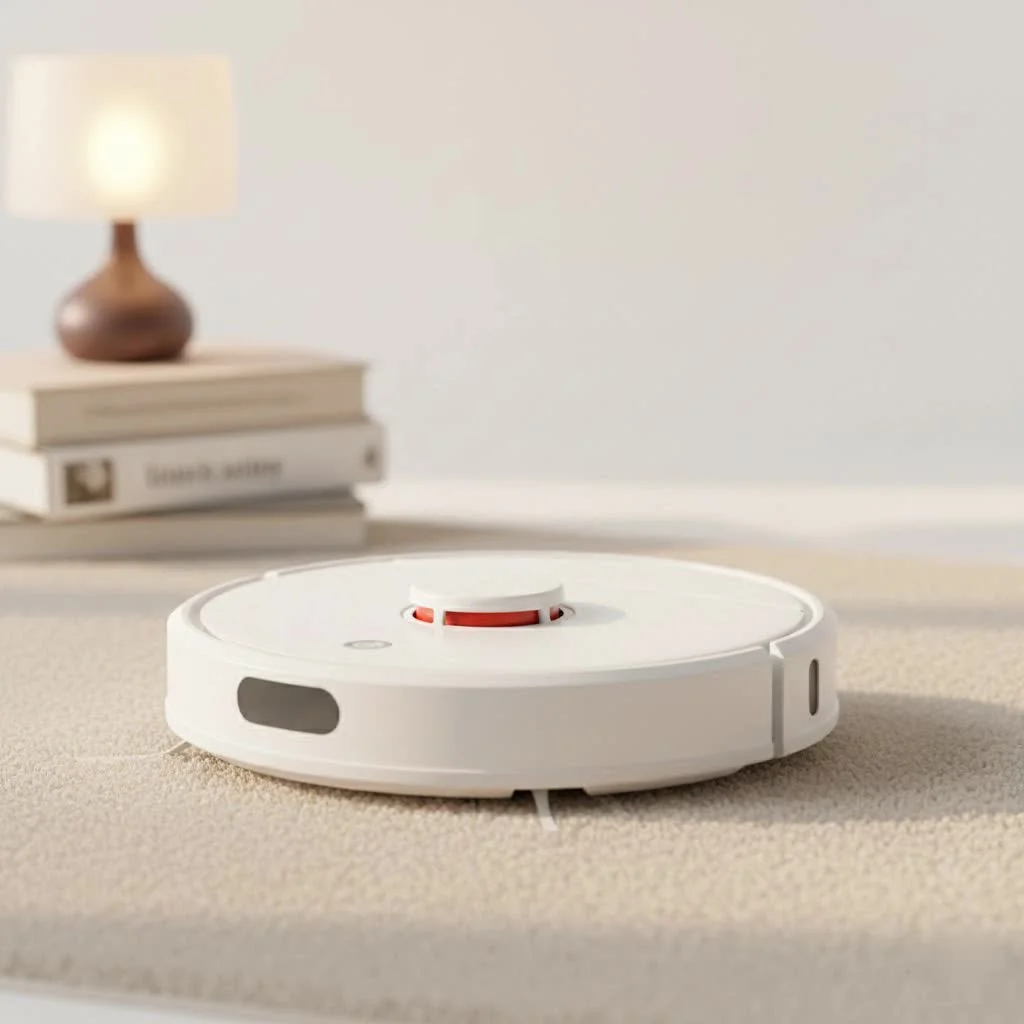
Beyond the Living Room: Who is the Makita Robot Vacuum Cleaner For?
Unlike its residential counterparts that meticulously navigate around coffee tables and plush rugs, the Makita robot vacuum cleaner is engineered for environments demanding resilience and substantial cleaning power. Think bustling workshops filled with fine dust and wood shavings, sprawling warehouses with concrete floors, or even large office spaces requiring consistent upkeep. These machines are not typically recommended for homes with intricate layouts or thick carpets, as their design is optimized for open, hard surfaces where their robust build and powerful suction can perform at their best. If you’re looking for a tireless assistant to maintain cleanliness in challenging, expansive areas, this industrial-grade robotic cleaner might be your perfect partner. For compare top robot vacuums on this site.
Powering the Clean: Makita’s Signature 18V LXT Battery System
One of the most compelling features of a Makita robot vacuum is its seamless integration into the brand’s expansive 18V LXT battery ecosystem. For those already invested in Makita power tools, this means you can use your existing batteries to power your robot cleaner, a significant convenience that simplifies charging and minimizes clutter. These powerful lithium-ion batteries provide impressive runtimes, with models like the DRC200Z offering up to 200-240 minutes of continuous operation on two 5.0Ah or 6.0Ah batteries, covering substantial areas up to 500 square meters. The newer DRC300 takes this even further, boasting up to 240 minutes of runtime and an incredible cleaning area of 600 square meters. It’s typically, the batteries and charger are sold separately, allowing users to leverage their existing Makita battery stock.
Inside the Machine: Technology and Cleaning Performance
Makita offers a couple of prominent robot vacuum models, primarily the DRC200Z and its advanced successor, the DRC300. Both are built with an emphasis on powerful, efficient cleaning for larger, tougher environments.
The Robust DRC200Z
The DRC200Z is a straightforward, powerful unit. It features a robust design with a large 2.5-liter dustbin, meaning fewer interruptions for emptying. Equipped with dual front brushes and a wide main brush, it excels at sweeping debris from edges and picking up a significant amount of dirt and even larger particles from hard floors and hard-wearing carpets. While it might struggle with thick pile carpets, its suction power is undeniable. Its navigation is more fundamental, relying on “random” and “pattern” modes, guided by a remote control and various sensors for obstacle detection.
The Smarter Evolution: The DRC300
|
Our Picks for the Best Robot Vacuum in 2026
As an Amazon Associate I earn from qualifying purchases.
|
||
| Num | Product | Action |
|---|---|---|
| 1 | Bagotte Robot Vacuum and Mop, Robot Vacuum Self Emptying, 5000Pa Powerful Suction, 90-Day Hands-Free, Advanced Smart Mapping, LiDAR Navigation Robotic Vacuum for Pet Hair, Dust, Carpet, WiFi/App/Alexa |

|
| 2 | ILIFE V2 Robot Vacuum Cleaner, Tangle-Free Suction, 120 Mins Runtime, Slim, Self-Charging Robotic Vacuum Cleaner, Ideal for Pet Hair and Hard Floors |
|
| 3 | ILIFE V5s Plus Robot Vacuum and Mop Combo with Wi-Fi/App/Alexa, Automatic Self-Charging Robotic Vacuum Cleaner, Slim and Quiet, Cleans Hard Floors Carpets and Pet Hair (V5s Pro Upgrade Version) |
|
| 4 | Robot Vacuum and Mop, 3-in-1 Robotic Vacuum Cleaner with 70-Day Self-Emptying Base, 360° LiDAR Navigation, Smart Mapping & Auto-Return, 6000Pa Strong Suction for Pet Hair, Carpets & Hard Floors |
|
| 5 | Robot Vacuum and Mop Combo, 11500Pa Suction, 3-in-1 Robotic Vacuum with Smart LiDAR Navigation, 70 Day Self-Emptying,160 Min Runtime,App/Alexa/Voice Control, Ideal for Pet Hair, Carpet & Hard Floor |
|
| 6 | ILIFE A30 Pro Robot Vacuum and Mop, Self Emptying Station for 60 Days, 5000Pa Suction, LiDAR Navigation, No-Go Zones, 2.4G WiFi/App/Alexa/Remote Control, Roller Brush for Carpet, Hard Floors, 110V |
|
| 7 | roborock Q10 S5+ Robot Vacuum and Mop, 10,000Pa Suction, Upgraded from Q8 max+, 70 Days Self-Emptying, Obstacle Avoidance, Sonic Mopping, Dual Anti-Tangle Design, Auto Mop Lifting, Ideal for Pet Hair |
|
| 8 | Tikom Robot Vacuum and Mop, 6000Pa Robotic Vacuum Cleaner with Self-Emptying Base, 90 Days Capacity, LiDAR Navigation, Home Mapping, Ideal for Pet Hair, Hard Floors, Carpet (L8000 Plus) |
|
| 9 | Tikom Robot Vacuum and Mop Combo, 5000Pa Robotic Vacuum Cleaner, 150 Min Max, App & Remote Control, Ideal for Hard Floor, Carpet, Pet Hair, Self-Charge(G8000 Max) |
|
| 10 | Robot Vacuum and Mop Combo, 2 in 1 Mopping Robotic Vacuum Cleaner with Schedule, Wi-Fi/App/Remote, Strong Suction, Self-Charging, Slim, Ideal for Hard Floor, Pet Hair, Low-Pile Carpet |
|
The DRC300 represents a significant leap in intelligence and features. Developed as a high-end model, it incorporates a three-stage cleaning system utilizing side brushes, a main brush, and vacuum suction for comprehensive cleaning. This model boasts a larger 3.0-liter dust box and operates at a quieter 62 dB compared to its predecessor. The real major upgrade, however, is its advanced navigation. The DRC300 includes a LiDAR sensor and a front camera, enabling sophisticated mapping capabilities. It can map and save up to five rooms, covering an impressive registrable mapping area of over 100,000 square feet. This smart robotic cleaner connects to your smartphone via a dedicated app, allowing you to check cleaning results, set prohibited areas, and even utilize an On-Timer function for automated cleaning schedules. Its obstacle detection is enhanced with six ultrasonic sensors, one bumper sensor, and the LiDAR sensor, ensuring it navigates industrial spaces with greater precision.
Navigating the Challenges: Sensors, Modes, and Obstacle Avoidance
Both Makita robot vacuum cleaner models utilize various sensors to navigate their environment effectively. They feature obstacle detection systems that use ultrasonic sensors and bumper sensors to avoid collisions. Infrared sensors also help prevent the units from falling off ledges.
For the DRC200Z, cleaning modes are simple:
- Random Mode: Ideal for spaces with many obstacles, such as office cubicles or gym areas. The robot moves freely, changing direction upon encountering an obstacle.
- Pattern Mode: More efficient for wide-open spaces like warehouses or long corridors, where the robot cleans in a systematic, back-and-forth pattern.
The DRC300 elevates this with its mapping function. In “Mapping Mode,” it intelligently navigates, mapping the room as it cleans and returning to its starting point. This allows for more efficient coverage and the ability to define specific cleaning areas or no-go zones via the app or with magnetic boundary tape. While robust, it’s crucial to prepare the cleaning area by removing significant obstacles, cables, or objects that could potentially get tangled or stuck, especially given its industrial strength.
Maintaining Your Makita: Tips for Longevity and Optimal Performance
To ensure your Makita robot vacuum cleaner continues to deliver powerful, efficient cleaning for years to come, regular maintenance is key.
Regular Dustbin Emptying
Given their large dust capacities, these vacuums are designed to hold a significant amount of debris. However, regularly emptying the dustbin, ideally after each major cleaning cycle or as prompted by the LED warning lamp (on the DRC300), prevents clogging and maintains suction power.
Filter Care
The filtration system, particularly the HEPA filter in some models, is crucial for capturing fine dust. Check and clean the filter regularly. For the DRC300, a buzzer and LED light will warn you if the air filter becomes clogged. Washable filters simplify maintenance.
Brush Maintenance
The side brushes and main brush can accumulate hair, string, or debris. Periodically inspect and clean them to ensure they rotate freely and sweep effectively. The DRC300 boasts improved repairability, with bottom plate and side brushes removable without tools.
Battery Care
Since these units run on Makita’s 18V LXT batteries, follow standard battery care practices. Charge them with Makita’s rapid chargers and store them properly to maximize their lifespan. While the DRC200Z requires manual battery charging, the DRC300’s parallel battery connection allows it to run on a single battery, offering flexibility.
Environmental Prep
Before a cleaning cycle, quickly clear larger obstacles and loose items to prevent the robot from getting stuck or damaging itself, especially in industrial settings.
The Verdict: Is a Makita Robot Vacuum Cleaner Right for You?
The Makita robot vacuum cleaner carves out a niche for itself as a serious automated cleaning solution for challenging environments. If you’re managing a workshop, a commercial space, or any large area that demands rigorous, consistent cleaning, a Makita is a strong contender. Its unparalleled power, extended run time, large dustbin capacity, and compatibility with Makita’s existing 18V LXT battery platform are significant advantages, especially for existing Makita users.
However, it’s not for everyone. If you’re seeking a “smart home” device with intricate mapping for complex, multi-level residential layouts and plush carpets, other brands might offer more tailored solutions. The DRC200Z is relatively basic in its navigation, while the DRC300, despite its advanced features, has seen some user feedback regarding app connectivity. Nonetheless, for durability, sheer cleaning power, and a dedication to handling the tougher cleaning jobs, the Makita robot vacuum cleaner stands as a shows industrial-grade automation.
The Future of Automated Cleaning in Industrial Settings
The evolution of the Makita robot vacuum cleaner, from the robust DRC200Z to the more intelligent, app-connected DRC300, signals a clear trend: automated cleaning is becoming increasingly sophisticated and indispensable in industrial and commercial environments. As technology advances, we can expect even greater integration with smart facility management systems, enhanced AI for dynamic obstacle avoidance, and potentially even self-emptying or self-charging stations tailored for high-demand, large-scale operations. The Makita robot vacuum cleaner is at the forefront of this shift, offering a glimpse into a future where heavy-duty cleaning is effortlessly handled by intelligent, tireless machines.
The Makita robot vacuum cleaner isn’t just another gadget; it’s a powerful statement in automated cleaning, designed for those who demand industrial-strength tidiness. Whether you’re wrangling sawdust or keeping a warehouse pristine, these machines embody Makita’s commitment to robust performance, making them invaluable assets for keeping large, demanding spaces consistently clean. They might not be the cuddliest robots, but they certainly get the job done, and then some.
Frequently Asked Questions
What environments are Makita robot vacuum cleaners best suited for?
Makita robot vacuum cleaners are best suited for challenging industrial and commercial environments such as workshops, warehouses, and large office spaces. Their robust design and powerful suction are optimized for open, hard surfaces, not intricate residential layouts or thick carpets.
How long can a Makita robot vacuum operate on a single charge?
A Makita robot vacuum can operate for an extended period, with models like the DRC200Z offering up to 200-240 minutes of continuous operation on two 5.0Ah or 6.0Ah 18V LXT batteries. The DRC300 also boasts up to 240 minutes of runtime, covering up to 600 square meters.
What are the key differences between the Makita DRC200Z and DRC300 models?
The Makita DRC300 is a more advanced model than the DRC200Z, featuring a three-stage cleaning system, a larger 3.0-liter dust box, and quieter 62 dB operation. The DRC300 also includes LiDAR and a front camera for sophisticated mapping, app connectivity, and enhanced obstacle detection with six ultrasonic sensors.
Can I use my existing Makita 18V LXT batteries with these robot vacuums?
Yes, a significant advantage of Makita robot vacuums is their compatibility with the brand's 18V LXT battery ecosystem. Users already invested in Makita power tools can use their existing batteries to power the robot cleaner, simplifying charging and reducing clutter.
What maintenance is required for a Makita robot vacuum cleaner?
Regular maintenance for a Makita robot vacuum cleaner includes emptying the large dustbin after each major cleaning cycle, checking and cleaning the filter regularly (especially the HEPA filter), and periodically inspecting and cleaning the side and main brushes. Proper battery care, following Makita's guidelines, is also essential for longevity.
Smart home that does not lock you in
Free PDF — protocol compatibility matrix for 30 hubs and devices.
This Makita vacuum is perfect for our warehouse. We have concrete floors that get a lot of grit and debris, and this thing just powers through it. It’s not trying to be a fancy home vacuum; it’s a workhorse. The robust build quality is exactly what we needed for this kind of environment.
We got this for our office space, which has a lot of hard floors, and it does a fantastic job keeping them clean. It’s definitely a heavy-duty machine, and you can tell it’s designed for commercial use. My only minor complaint is that it’s a bit louder than I expected, but for the cleaning power it provides, it’s a trade-off I’m willing to make.
I bought this thinking it might be overkill but good for my large garage, but it’s really designed for much bigger industrial settings. It cleans well, especially on hard surfaces, but the navigation isn’t as refined as some residential models. It sometimes gets stuck in corners more often than I’d like, which is a bit frustrating.
I manage a small woodworking shop, and this Makita robot vacuum has been a game-changer. It handles sawdust and wood shavings like a champ, which was always a huge headache before. The 18V LXT battery system really delivers on runtime, letting it cover the whole floor without needing a recharge mid-shift. Definitely built for tough jobs, not just a living room.